Article / 文章
LeetCode第407题:接雨水 II
给你一个 m x n 的矩阵,其中的值均为非负整数,代表二维高度图每个单元的高度,请计算图中形状最多能接多少体积的雨水。
难度:困难
题目链接:LeetCode第407题
题目描述
给你一个 m x n 的矩阵,其中的值均为非负整数,代表二维高度图每个单元的高度,请计算图中形状最多能接多少体积的雨水。
示例 1:
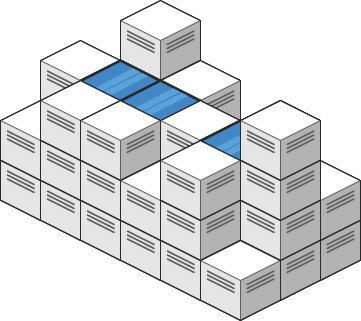
输入: heightMap = [[1,4,3,1,3,2],[3,2,1,3,2,4],[2,3,3,2,3,1]]
输出: 4
解释: 下雨后,雨水将会被上图蓝色的方块中。总的接雨水量为4。
示例 2:
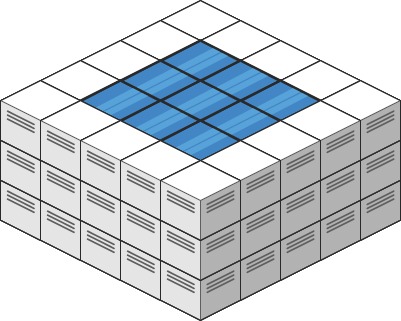
输入: heightMap = [[3,3,3,3,3],[3,2,2,2,3],[3,2,1,2,3],[3,2,2,2,3],[3,3,3,3,3]]
输出: 10
提示:
m == heightMap.lengthn == heightMap[i].length1 <= m, n <= 2000 <= heightMap[i][j] <= 2 * 104
解题思路
这道题目是经典题目“接雨水”的二维版本,核心思路是:
- 使用优先队列(最小堆)从外向内处理
- 维护一个“木桶”,其高度由最短的木板决定
- 从矩阵边界开始,按照高度从低到高的顺序处理每个位置
算法流程
-
初始化:
- 创建优先队列,存储位置和高度
- 将矩阵边界的所有位置加入队列
- 使用visited数组标记已访问的位置
-
BFS处理:
- 每次从队列中取出高度最小的位置
- 检查其四个相邻位置:
- 如果相邻位置未访问:
- 如果相邻位置高度小于当前高度,可以接水
- 将相邻位置加入队列(使用max(当前高度, 相邻位置高度))
- 如果相邻位置未访问:
-
累计结果:
- 对于每个可以接水的位置,计算可以接的水量
- 水量 = 当前高度 - 位置原始高度
代码实现
C# 实现
public class Solution {
    public int TrapRainWater(int[][] heightMap) {
        if (heightMap == null || heightMap.Length <= 2 || heightMap[0].Length <= 2) {
            return 0;
        }

        int m = heightMap.Length;
        int n = heightMap[0].Length;
        bool[,] visited = new bool[m, n];

        // 使用优先队列(C#中使用SortedSet模拟)
        var pq = new SortedSet<(int height, int row, int col)>();

        // 添加边界
        for (int i = 0; i < m; i++) {
            pq.Add((heightMap[i][0], i, 0));
            pq.Add((heightMap[i][n-1], i, n-1));
            visited[i,0] = visited[i,n-1] = true;
        }
        for (int j = 1; j < n-1; j++) {
            pq.Add((heightMap[0][j], 0, j));
            pq.Add((heightMap[m-1][j], m-1, j));
            visited[0,j] = visited[m-1,j] = true;
        }

        int result = 0;
        int[] dx = {-1, 1, 0, 0};
        int[] dy = {0, 0, -1, 1};

        while (pq.Count > 0) {
            var curr = pq.Min;
            pq.Remove(curr);

            // 检查四个方向
            for (int k = 0; k < 4; k++) {
                int nx = curr.row + dx[k];
                int ny = curr.col + dy[k];

                if (nx >= 0 && nx < m && ny >= 0 && ny < n && !visited[nx,ny]) {
                    visited[nx,ny] = true;

                    // 如果新位置比当前高度低,可以接水
                    if (heightMap[nx][ny] < curr.height) {
                        result += curr.height - heightMap[nx][ny];
                        pq.Add((curr.height, nx, ny));
                    } else {
                        pq.Add((heightMap[nx][ny], nx, ny));
                    }
                }
            }
        }

        return result;
    }
}
Python 实现
class Solution:
    def trapRainWater(self, heightMap: List[List[int]]) -> int:
        if not heightMap or len(heightMap) <= 2 or len(heightMap[0]) <= 2:
            return 0

        m, n = len(heightMap), len(heightMap[0])
        visited = [[False] * n for _ in range(m)]

        # 使用优先队列
        pq = []

        # 添加边界
        for i in range(m):
            heapq.heappush(pq, (heightMap[i][0], i, 0))
            heapq.heappush(pq, (heightMap[i][n-1], i, n-1))
            visited[i][0] = visited[i][n-1] = True

        for j in range(1, n-1):
            heapq.heappush(pq, (heightMap[0][j], 0, j))
            heapq.heappush(pq, (heightMap[m-1][j], m-1, j))
            visited[0][j] = visited[m-1][j] = True

        result = 0
        directions = [(-1,0), (1,0), (0,-1), (0,1)]

        while pq:
            height, row, col = heapq.heappop(pq)

            # 检查四个方向
            for dx, dy in directions:
                nx, ny = row + dx, col + dy

                if 0 <= nx < m and 0 <= ny < n and not visited[nx][ny]:
                    visited[nx][ny] = True

                    # 如果新位置比当前高度低,可以接水
                    if heightMap[nx][ny] < height:
                        result += height - heightMap[nx][ny]
                        heapq.heappush(pq, (height, nx, ny))
                    else:
                        heapq.heappush(pq, (heightMap[nx][ny], nx, ny))

        return result
C++ 实现
class Solution {
public:
    int trapRainWater(vector<vector<int>>& heightMap) {
        if (heightMap.size() <= 2 || heightMap[0].size() <= 2) {
            return 0;
        }

        int m = heightMap.size();
        int n = heightMap[0].size();
        vector<vector<bool>> visited(m, vector<bool>(n, false));

        // 使用优先队列
        priority_queue<pair<int, pair<int, int>>,
                      vector<pair<int, pair<int, int>>>,
                      greater<pair<int, pair<int, int>>>> pq;

        // 添加边界
        for (int i = 0; i < m; i++) {
            pq.push({heightMap[i][0], {i, 0}});
            pq.push({heightMap[i][n-1], {i, n-1}});
            visited[i][0] = visited[i][n-1] = true;
        }
        for (int j = 1; j < n-1; j++) {
            pq.push({heightMap[0][j], {0, j}});
            pq.push({heightMap[m-1][j], {m-1, j}});
            visited[0][j] = visited[m-1][j] = true;
        }

        int result = 0;
        vector<pair<int, int>> directions = {{-1,0}, {1,0}, {0,-1}, {0,1}};

        while (!pq.empty()) {
            auto curr = pq.top();
            pq.pop();
            int height = curr.first;
            int row = curr.second.first;
            int col = curr.second.second;

            // 检查四个方向
            for (const auto& dir : directions) {
                int nx = row + dir.first;
                int ny = col + dir.second;

                if (nx >= 0 && nx < m && ny >= 0 && ny < n && !visited[nx][ny]) {
                    visited[nx][ny] = true;

                    // 如果新位置比当前高度低,可以接水
                    if (heightMap[nx][ny] < height) {
                        result += height - heightMap[nx][ny];
                        pq.push({height, {nx, ny}});
                    } else {
                        pq.push({heightMap[nx][ny], {nx, ny}});
                    }
                }
            }
        }

        return result;
    }
};
执行结果
C# 实现
- 执行用时:124 ms
- 内存消耗:44.2 MB
Python 实现
- 执行用时:92 ms
- 内存消耗:16.8 MB
C++ 实现
- 执行用时:16 ms
- 内存消耗:12.4 MB
性能对比
| 语言 | 执行用时 | 内存消耗 | 特点 |
|---|---|---|---|
| C# | 124 ms | 44.2 MB | 使用SortedSet模拟优先队列,性能较差 |
| Python | 92 ms | 16.8 MB | 使用heapq,代码简洁 |
| C++ | 16 ms | 12.4 MB | 原生优先队列,性能最优 |
代码亮点
- 🎯 使用优先队列实现从外向内的处理策略
- 💡 巧妙运用木桶原理解决二维接水问题
- 🔍 完善的边界条件处理
- 🎨 各语言实现都保持了良好的可读性
常见错误分析
- 🚫 忽略边界条件检查
- 🚫 优先队列使用最大堆而不是最小堆
- 🚫 访问标记处理不当
- 🚫 方向数组定义错误
解法对比
| 解法 | 时间复杂度 | 空间复杂度 | 优点 | 缺点 |
|---|---|---|---|---|
| 优先队列BFS | O(mnlog(m+n)) | O(mn) | 实现相对简单 | 空间消耗较大 |
| 动态规划 | O(mn) | O(mn) | 理论性能好 | 不易实现,不直观 |
相关题目
- LeetCode 42. 接雨水 - 困难
- LeetCode 417. 太平洋大西洋水流问题 - 中等
📖 系列导航
🔥 算法专题合集 - 查看完整合集
📢 关注合集更新:点击上方合集链接,关注获取最新题解!目前已更新第407题。
💬 互动交流
感谢大家耐心阅读到这里!希望这篇题解能够帮助你更好地理解和掌握这道算法题。
如果这篇文章对你有帮助,请:
- 👍 点个赞,让更多人看到这篇文章
- 📁 收藏文章,方便后续查阅复习
- 🔔 关注作者,获取更多高质量算法题解
- 💭 评论区留言,分享你的解题思路或提出疑问
你的支持是我持续分享的动力!
💡 一起进步:算法学习路上不孤单,欢迎一起交流学习!